Monday, January 21, 2013

Enjoy the Best Spas in Tuscany


No matter what the season, a day (or more) spent at a luxurious thermal spa resort is regenerating.
It’s a perfect way to escape life’s stress and restore the mind and body. The Italian spa experience is an all-encompassing event that focuses on total well-being. The settings of the resorts are magnificent, usually grand historic villas immersed in incredible gardens and built around the source of a natural hot spring. Their glorious past can be traced as far back as the Etruscans and Romans, who were the first to recognize the therapeutic properties of the thermal waters.

Today, these facilities are state-of-the-art, offering the most modern technology, the highest standards of comfort and (of course) gourmet cuisine. Tuscany boasts many of the country’s most prestigious spas, recognized to be among the best in Europe. Just about every province in the region has an excellent spa resort, and there are also many public thermal baths where people can enjoy these natural mineral waters for the day, much as one would go to a public swimming pool.

Another reason to visit Tuscany’s spas is that they are usually in historic towns which in and of themselves justify the trip. Among the most characteristic is Bagno Vignoni. Located on a hill overlooking the beautiful Val d’Orcia, this unique medieval village has been remarkably preserved. The unusual thing about this town is that it is built around a square of water. This rectangular tank, called the “Square of Sources” contains the steamy thermal waters that come from the underground aquifer of volcanic origins and confer an almost dreamlike atmosphere.

Bagno Vignoni was made famous by the ancient Romans who recognized the healing power of its waters. Later, in the Middle Ages, it became even more popular due to its proximity to the Via Francigena – an important route connecting Northern Europe to Italy. Pilgrims often stopped in the village on their way to Rome to rest, taking advantage of the hot springs to rejuvenate themselves. During the early Renaissance the town became a sought after vacation destination for many of the most illustrious figures of the time, including Pope Pius II, Saint Catherine of Siena and Lorenzo de’ Medici.

Still today, this remarkable place leaves its mark on the visitor and it continues to be one of the most well-known spa locations in Tuscany, where you can find modern facilities to enjoy a wide range of treatments. In addition, the stunning landscape of the local area, the nearby towns of San Quirico, Pienza and Montalcino, as well as some of the most impressive abbeys in Italy (Sant’Antimo and Monte Oliveto Maggiore) make a trip to Bagno Vignoni an absolutely unforgettable experience. 

Wednesday, January 16, 2013

The Nuances of Luxury Travel


What does Luxury mean to you?

Recently, I read a debate about the real meaning of “Luxury” which made me reflect on my own definition: I think that in today’s hectic world, luxury can best be defined as a wonderful experience that takes you away from your daily routine and all its pressures. Clearly it can include the lavish perks associated with the word in its most literal sense, but it doesn’t necessarily have to.

I imagine luxury travel to be the all-encompassing voyage that allows you to discover something new and exciting about the place you are visiting which will consequently teach you something more about yourself. Exploring, enjoying and learning all belong to the luxury travel experience – whether you sleep in a five-star hotel or in a comfortable farmhouse.

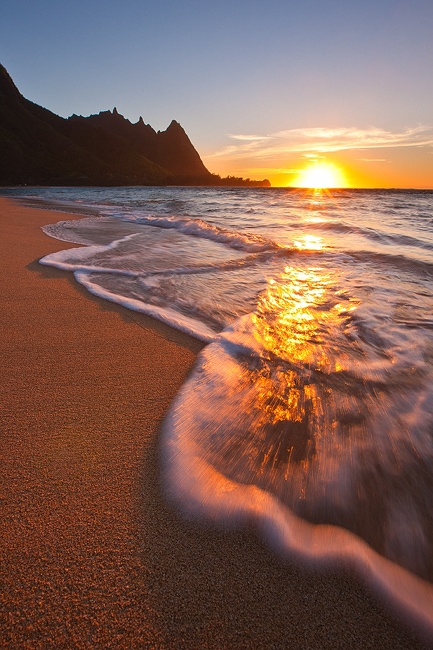
Often, nature determines luxury. For example, a stunning sunset on the beach is just as luxurious while sitting on the sand as it is on a cushioned lounger, and a deluxe villa or hotel room will certainly feel more sumptuous if it offers an amazing view of some natural landscape.


Another thing that comes to mind is that for those who can afford luxury travel, as it is commonly intended, many of the material features they encounter will seem rather banal, since they already live luxuriously every day. What will set things apart will be their ability to surprise or intrigue. To satisfy this clientele, you must offer them something which is unique and original – that they cannot have every day. Yes, this could be an exotic location, historic sites, excellent local cuisine, and so forth. However, I believe that there is also something more subtle involved.

I saw proof of this a couple of years ago during my summer vacation. I was walking along a pristine beach on one of Spain’s most beautiful islands when I recognized a very famous (and wealthy) Italian. He was sitting on the sand with his two small children building a sandcastle. Everyone was smiling and they looked just like any other normal family on the strip of public beach (where you have to bring your own umbrella and towel). The fact that he was the president of Ferrari didn’t seem to matter. He was enjoying the simplicity of the moment – something I am sure doesn’t happen too often in his busy life.

Yes, he had reached the beach with his private tender, and would return to his yacht afterward. Yet I would bet that if today, two years later, he thinks back on that morning, he’ll remember the sandcastle, the smile on his (and particularly his children’s) face, and the fact that no one had recognized him – and that would be for him the luxury of that day.

What’s your definition?

Wednesday, January 9, 2013

Why Does One Need a Vacation Planner?

In today’s age of internet technology it would stand to reason that people are able to plan their own vacations – and many do.
With the plethora of information and booking sites available online, it is more than possible to do everything yourself.  Nearly everyone has made travel arrangements from their own desk at some point, and many have stopped going to travel agents to book airline tickets and hotels.

So, that being said, one would wonder why I decided to become a vacation planner – when it would seem that it's a dying profession. Well, the truth is that it's really NOT. On the contrary, it is a growing sector thanks to the way we approach travel, by adapting to the changes in the market and focusing on the new and different demands which have emerged from the internet era: primarily, the client's need for personalized attention and human interaction.


One of the first things my clients tell me is that they had become overwhelmed by all the information on the web. Just about every one of them had started searching on their own, hoping to find that perfect villa rental, the best cooking class or wine tour, the driver service or chef to complete their dream vacation. Many had laid out a preliminary itinerary of Tuscany – before they realized that they weren’t even sure what “Tuscany” really meant. How far were these beautiful places from one another? Where exactly was this extraordinary villa they had been looking at? How many things could they conceivably do in a week without killing themselves? And thus, the panic started setting in.

In many cases when families or groups travel together there is a designated leader chosen to plan things. That person feels a lot of pressure to get it right – since the whole group’s vacation is riding on his, or her, shoulders. Taking a trip to Italy is not the same as going on a weekend getaway in your own country. There is a lot more at stake. Many times this is “the vacation of a lifetime”, which has been dreamed about for years. So, winging it doesn’t really make sense.

The solution is to spend A LOT of time and effort surfing, researching, reading about the destination and trying to compile all this information. Don’t get me wrong, I strongly advocate learning about where you will be traveling. However, many people do not have the luxury of all the free time that is required to do the proper search. The over abundance of material available to consult is also detrimental. It is like an orchestra with too many instruments and no conductor – the final result will most probably not be music to the ears.

This is where I can help. My expertise comes from being on site and knowing the ropes as an insider. My advise will narrow down your options, making them easier to process. My presence will offer you a sense of security, during the planning phase as well as while you are here. Italy is a magnificent place, but it does have its issues. My clients have encountered lost luggage, train and public transportation strikes, missed flight connections and other minor mishaps where having a friendly local to contact proved very helpful and comforting. Your cyberspace reservation doesn’t offer that.

From a financial point of view it’s really not a great expense either – and when you consider the overall investment you are making for your trip, it’s actually negligible. Also important to realize is that I can provide villa rentals (of top-notch, handpicked properties) that will never cost you more than what a rental agency asks – and sometimes it will be less. The same goes for all the other services I offer, because I pick and choose to ensure an excellent price/quality ratio.

So, why not blend the best of both worlds? Do your research, create your wish list, and then call upon someone you can trust to assist you in making it become a reality. That’s where the real luxury of having a vacation planner lies.


Sunday, January 6, 2013

The Many Landscapes of Tuscany: Val d'Orcia


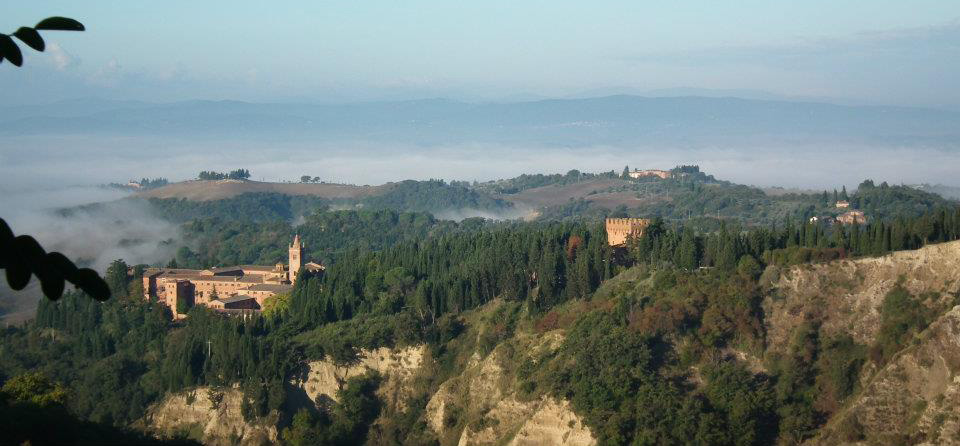
The incredible Val d’Orcia has long been appreciated for its unique landscapes. These rolling hills that extend south from Siena to Monte Amiata were declared a World Heritage Site by UNESCO in 2004. Cited for its exceptional natural beauty, this territory represents the Renaissance ideals of good governance and harmony with nature, which have set an example for the world of how to achieve and appreciate an aesthetically pleasing landscape. It is no wonder that for centuries painters have been inspired by these gently furrowed hills, with their changing colors, cultivated patchwork fields, scattered dwellings and winding roads lined with cypress trees. Even today, the Val d’Orcia remains one of the most photographed and filmed areas of Tuscany.


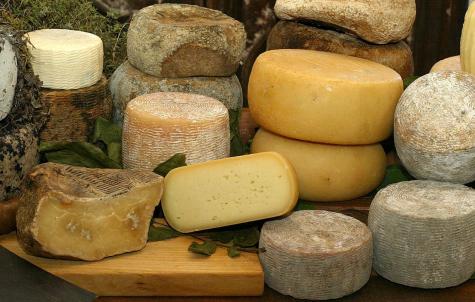
Thanks to some of its famous hilltop towns and top quality wines and cheeses, there is probably no one who doesn’t know this place. Perhaps the words Val d’Orcia are not familiar to everyone, but certainly Brunello, Montalcino, Pienza, Pecorino, Montepulciano (although just outside the official border), must ring a bell! 
This is the land of some of Tuscany’s most prized possessions.
Throughout history the location, more or less halfway between Florence and Rome, has made this area very popular. Its strategic position as a crossroads makes it an excellent home base for discovering the jewels of southern Tuscany, including the Maremma coast, and the neighboring regions of Umbria, and Lazio.

Another thing that makes this river valley so special is that it has preserved much of its ancient charm, keeping modernity and mass tourism at a certain distance. This is a place where nature still rules supreme, and those looking to escape from the bustle of city life will find a corner of paradise and tranquility waiting for them.


The sweeping landscapes, charming medieval towns, natural hot spring spas, extraordinary wine and food will astound and embrace you. These exceptional characteristics have given Val d’Orcia its most recent vocation as a luxury destination. Ancient farmhouses have undergone incredible restorations resulting in first-class accommodations for visitors interested in a full-immersion experience. Boutique hotels and spa resorts have been consistently improving, to offer some of the most state-of-the-art facilities in an unparalleled setting. 

While in Val d’Orcia one can do a myriad of things. Nature lovers can hike or bike to their hearts’ delight. History buffs can explore the many churches, monasteries, historic towns and tiny hamlets that will reveal secrets from the Middle Ages and Renaissance. Wine connoisseurs can indulge by visiting some of the world’s most revered vineyards. Foodies can enjoy the growing number of fine dining options which have made this area a center of culinary excellence in Italy. 

But most of all, visitors can get an authentic taste of Tuscany, where time seems to have remained suspended in order to offer us a glimpse of how life was so long ago.


Wednesday, January 2, 2013

Italy Awaits the Befana


January 6th is the Epiphany, a national holiday in Italy, when the Three Kings arrive in Bethlehem bearing gifts for the newborn Savior. However, here there is another tradition associated with this day that is perhaps even more widely considered: it is the celebration of the Befana (the name most likely derives from Epifania) – an old (but benevolent) witch-like hag arrives on her broom during the night of the 5th to bring treats (usually sweets in a stocking) to the children who have been good… (remind you of someone else??) – in case of the contrary, she leaves them some coal.

There are many legends and versions of how this tradition was born – perhaps the most probable having its origins in the rural celebration of the death and rebirth of Mother Nature on the 12th night of Christmas (after the winter solstice). Historically it was thought that she had become old and worn by the winter, thus she was represented as an old woman dressed in tatters who would make her final journey to distribute the “goods of the land” – like seeds for the earth - before perishing and being replaced by a youthful substitute in the spring.

Another legend has it that when the three Magi where seeking the birthplace of Jesus they asked an old woman for directions. She refused to accompany them but later repented for this decision and set out to try and find them, to show them the way, but never did. She stopped in every house to see if the holy child was there, and left sweets. From then on, during the night between January 5th and 6th she would continue to leave gifts for all children as an attempt to absolve her guilt.


Whatever the “real story” might be, the Befana represents the final day of the Christmas holidays, and we are all a bit sad to see her go!


Sunday, December 30, 2012

A Great Visit to Palazzo Davanzati

This year my house was full of guests for the holidays, something I really enjoy. So, besides all the Christmas feasting that symbolizes the Italian tradition, I wanted to show my visitors the beauty of being in Tuscany (and close to Florence) during this special time of the year. The weather certainly didn’t cooperate much, as we had rain and fog for the better part of the period, but I did my best to counteract Mother Nature all the same.

One of the best choices was to attend Aperitivo ad Arte at the Palazzo Davanzati. It had been years since I had been to this museum, so I was looking forward to it as much as everyone else. This wonderful event is a great opportunity for locals, as well as tourists, to discover one of the city's lovely museums in a unique and captivating setting. In fact, I noticed that many Florentines present that evening became increasingly excited as they realized how beautiful this historic palazzo was. Many commented on the fact that they had never been there before, acknowledging that they had really missed something special. These observations made me reflect on how many of us live in cities that we only know in part.


In the major art cities of the world, monuments and museums are almost always flooded with tourists, making them unpopular with locals who prefer not to brave the lines or deal with the crowds. Thus, residents often overlook so many things which are literally sitting right under their noses.

This is a major reason why initiatives like this one, held in the off season, are particularly useful. It is a chance for Florentines to enjoy their city and become acquainted with some of its most beautiful venues.

Palazzo Davanzati was originally built for the Davizzi family, wealthy merchants and bankers, in the mid 14th century. In 1578 it was purchased by the Davanzati family, who retained possession until 1838 when it was divided into several apartments and subsequently suffered extensive damage.

In 1904 the building was bought by Elia Volpi, an antiques dealer who restored and furnished it to create a private museum, The Old Florentine House, in 1910. Future events and misfortune eventually led to the demise of the museum and its belongings until the State took it over in 1951 and reopened it to the public five years later. However, in 1995 the museum was closed for major restoration until 2005 and only this year (2012) was it fully reopened.  

The building is a rare architectural example of the transition from the medieval tower house to the Renaissance palace. In fact, the Davanzati family united several tower houses to achieve their grand palazzo. The façade originally had an open three-arched loggia on the ground floor that was used as a shop. Today it is closed and on the top floor there is an open loggia (with a great view of the city) which was added in the 16th century.


Upon entering the building you are transported back in time. The impressive courtyard has an irregular shape marked by arches, octagonal pillars with decorated capitals and a majestic stone staircase leading to the living quarters on the three upper floors. Throughout the visit you will feel as if you are really inside a historic residence where time has stood still. The elegant reception rooms and spacious bedrooms are decorated with fine antiques, paintings, sculptures, tapestries and pottery. A large kitchen, located on the top floor, boasts a series of utensils and antique household appliances. The original architectural elements like hand painted wood ceilings and wall decorations, and the unique feature of having bathrooms on every floor, an uncommon luxury in a home from this period, underscore the elite origins of this beautiful palazzo.


 Another thing not to be missed is the stunning collection of fine lace and embroidery representing the most exquisite samples of European manufacture between the 17th and 20th centuries.


Thursday, November 29, 2012

Christmas in Tuscany


Traditionally, in Italy, the holiday of the Immaculate Conception on Dec. 8th marked the official start of the Christmas season. Today, as is the custom in many other nations, the date has been pushed back and by late November the countdown to Christmas usually begins. Street lights and decorations go up, stores windows display their festive regalia while piping in Christmas carols and offering special promotions (among the foreign customs which have now been adopted here to promote the commercial side of the holidays). However, one of the nicest traditions that has taken hold over the years are the local holiday markets and fairs.

Originally a custom in northern Europe, Christmas markets are now an important part of Italy’s holiday tradition. Throughout Tuscany, both in the larger cities and the small towns, this is the season to experience the festive atmosphere of these charming markets. Beautiful handicrafts and wonderful food specialties fill the stands that line the major town squares. The churches display beautiful nativity crèches – with handmade figurines that attest to the ancient artisan tradition which has made Italy famous around the world. Some towns hold medieval markets which evoke the historic origins of this customary celebration – with jugglers and street performers dressed in period costumes to create the proper setting.

So, thankfully, there still is a way to enjoy the holiday season in a more traditional fashion. 
Clearly one can purchase gifts and decorations, but the nice thing is that there are unique products to choose from which defy the current trend of global commercialization. It is the perfect chance to sample some of the delicious seasonal foods that can only be found at this time of year. And, of course, all of this takes place in some of Tuscany’s most beautiful cities and towns, which become even more magical when decked out in their holiday best.

There are many locations to choose from, and most locals and visitors often try to see more than one during the season.
Florence pays homage to the Germanic origins of the Christmas market by hosting the German Christmas Market in Piazza Santa Croce from Nov. 28 through Dec. 16. 

Vendors come from abroad to share their countries’ typical crafts and gastronomic specialties in one of the city’s most beautiful piazzas.

Many churches throughout the city have nativity scenes that are worth a visit, but DO NOT miss the stunning crèches displayed at the cathedral of Santa Maria del Fiore, best known as the Duomo, from Dec. 8th. 

The exquisite terracotta figures in this majestic setting are truly impressive. 


Another unique event in Florence is the Cavalcata dei Magi
(the procession of the three kings), held on Jan. 6th.


In the Mugello area there are Christmas markets on the weekends throughout the month of December: Marradi, Barberino di Mugello, Dicomano and Palazzuolo sul Senio – where there is also an event called the 1000 Cribs of Pallazuolo which is obviously dedicated to the most beautiful nativity scenes.

Arezzo and the Casentino area will also host events throughout the holiday season. 

Siena’s Medieval Market in Piazza del Campo will be held on December 15th  and 16th. 
Although it is not a traditional Christmas market, there will be over 160 stands with typical regional foods and artisan crafts. In addition, the historic atmosphere will be re-enacted by street performers and artists. There will also be guided tours available to discover the city as it was in the Middle Ages.

In Chianti there will be various Christmas markets: Greve in Chianti: Dec. 8-9
Barberino Val d’Elsa: Dec. 8, 9 and 23
Mercatale: Dec. 15-16
In the historic center of Casole d’Elsa a there will be a live re-enactment of the nativity with over 250 participants on Dec. 26, 29 and 30 and on Sunday Jan. 6.

If you are in the area of Pisa, the city’s Christmas market runs from Nov. 24 to Dec. 24, with over 55 exhibitors. San Miniato, the town of the White Truffle, has one of Tuscany’s most beautiful crèches from Dec. 7 to Jan. 3rd in the church of San Giovanni Battista di Cigoli.

The city of Lucca also has a medieval Christmas market from Dec. 6-9.